
Women’s Jeans Fit Guide: How to Choose a Flattering Denim Shape
A practical guide to denim rises, leg shapes, measurements and outfit balance, with examples from the MAXCT women’s pants collection.
The best jeans are not defined by one trend or one body type. They are the pair that sits where you want it to sit, gives you room to move and works with the tops and shoes you already own. A useful denim search therefore starts with measurements and proportion, not a label such as “slimming” or “oversized.”
This guide compares four popular shapes in the MAXCT women’s pants collection: wide-leg, baggy, flared and cargo-inspired jeans. Use it to narrow your options, then check the measurements and material information on each product page before choosing a size.
Measure the jeans that already fit you
Lay a comfortable pair flat and measure the waistband, front rise, hip width, thigh, inseam and leg opening. Doubling the flat waist and hip measurements gives you a useful garment comparison. Your body measurements also matter, but comparing garment to garment helps account for the amount of ease you prefer.
- Rise: the distance from the crotch seam to the top of the waistband. A higher rise usually creates a longer visual line below the waist.
- Inseam: the inside-leg length. Compare it with the shoes you plan to wear, especially for floor-skimming styles.
- Leg opening: a helpful indicator of how straight, wide or flared the silhouette will look.
- Ease: the extra room between your body and the garment. Rigid-looking denim usually needs more ease than a stretch fabric.
Size labels vary between products, so the size chart on the current product page should always take priority over the size printed in another pair you own.
Wide-leg jeans: clean shape with generous movement
Wide-leg jeans fall away from the hip or thigh and create a strong vertical shape. They work well with fitted tops, cropped jackets and sweaters that can be partially tucked. If both the top and jeans are roomy, show a little definition at the waist or wrist to keep the outfit intentional.
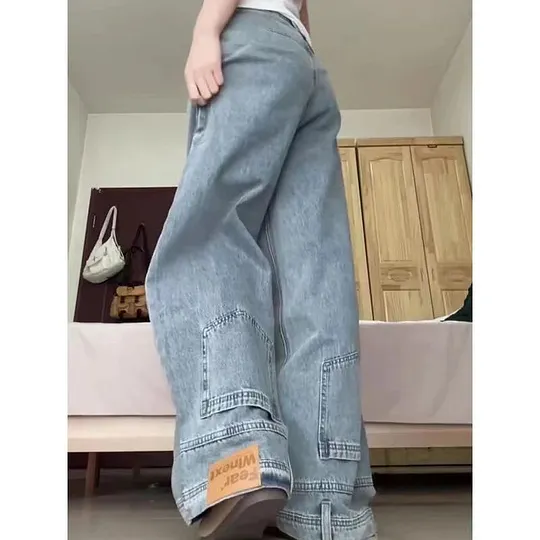
For a simple formula, combine wide-leg denim with a ribbed knit and a streamlined shoe. The wide hem already makes a statement, so a quiet upper half often feels balanced.
Baggy jeans: relaxed volume and streetwear proportion
Baggy denim is designed around extra room through the seat and leg. The most important checkpoints are the waistband, crotch depth and total length. A pair can look relaxed without sliding at the waist or folding excessively over the shoe.
The embroidered oversized baggy jeans bring graphic detail to the silhouette. Pair them with a simple fitted tee, compact cardigan or short jacket so the embroidery and shape remain the focus.
Flared jeans: definition through the thigh, width at the hem
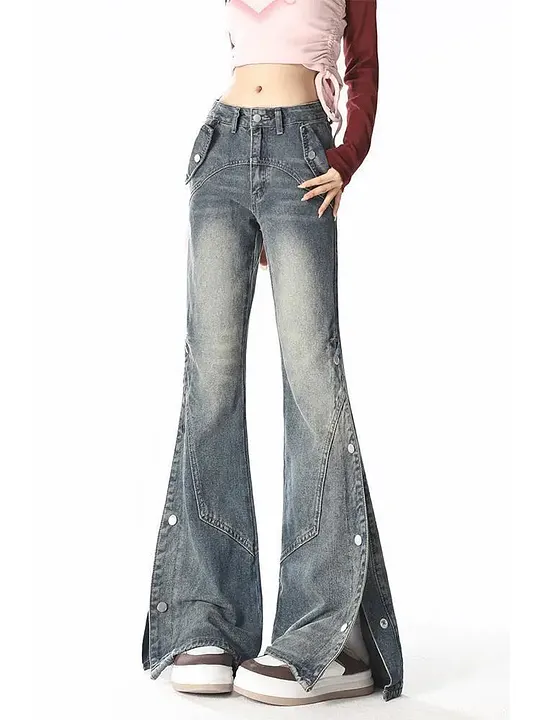
Flared jeans are narrower above the knee and open toward the hem. That change in width can balance a fitted knit, blouse or longer coat. Because the hem interacts closely with footwear, check the inseam carefully. A shoe with a little height can prevent a longer flare from dragging, while a shorter inseam works better with flats.
Cargo-inspired pants: detail, pockets and utility styling
Cargo-inspired pants add seams, pockets or adjustable hems. Because these details create visual weight, keep other elements controlled. A solid sweater, short jacket or close-fitting long-sleeve top lets the construction stand out.
For a bolder option, the camouflage work pants can be grounded with black, cream or olive layers. Repeat only one color from the print elsewhere in the outfit.
Choose the wash and details for your wardrobe
Dark and even washes usually read cleaner, while fading, distressing and contrast stitching create a more casual look. Before choosing, picture three tops and two pairs of shoes you already own. If the jeans work with most of those pieces, they are more likely to earn regular wear.
Also look closely at pocket placement, seam lines, hardware and hem treatments. These details influence the outfit as much as the basic cut. Product photography can show the design, but the listed measurements determine whether the proportions will work for you.
Three reliable denim outfit formulas
- Wide-leg jeans + fitted turtleneck + short jacket: a clear waist and long lower line.
- Baggy jeans + compact knit + structured bag: relaxed clothing balanced by one crisp accessory.
- Flared jeans + tucked blouse + pointed shoe: a continuous line that emphasizes the flare.
For cold-weather combinations, see our guide to styling women’s sweaters.
Frequently asked questions
Should I size up for baggy jeans?
Not automatically. Baggy styles may already include extra ease. Compare the garment measurements with jeans you own and choose based on the waistband, hip and rise rather than the word “baggy.”
How long should wide-leg jeans be?
That depends on the intended look and your footwear. A longer hem can skim the top of a shoe, but it should not create a trip risk or drag heavily on the ground.
What top works with statement jeans?
A solid fitted knit, tee or simple blouse is the easiest starting point. Once the proportions feel balanced, add one accessory that repeats a color or detail from the jeans.
Browse all women’s pants and jeans, compare measurements carefully and choose the silhouette that fills a real gap in your wardrobe.